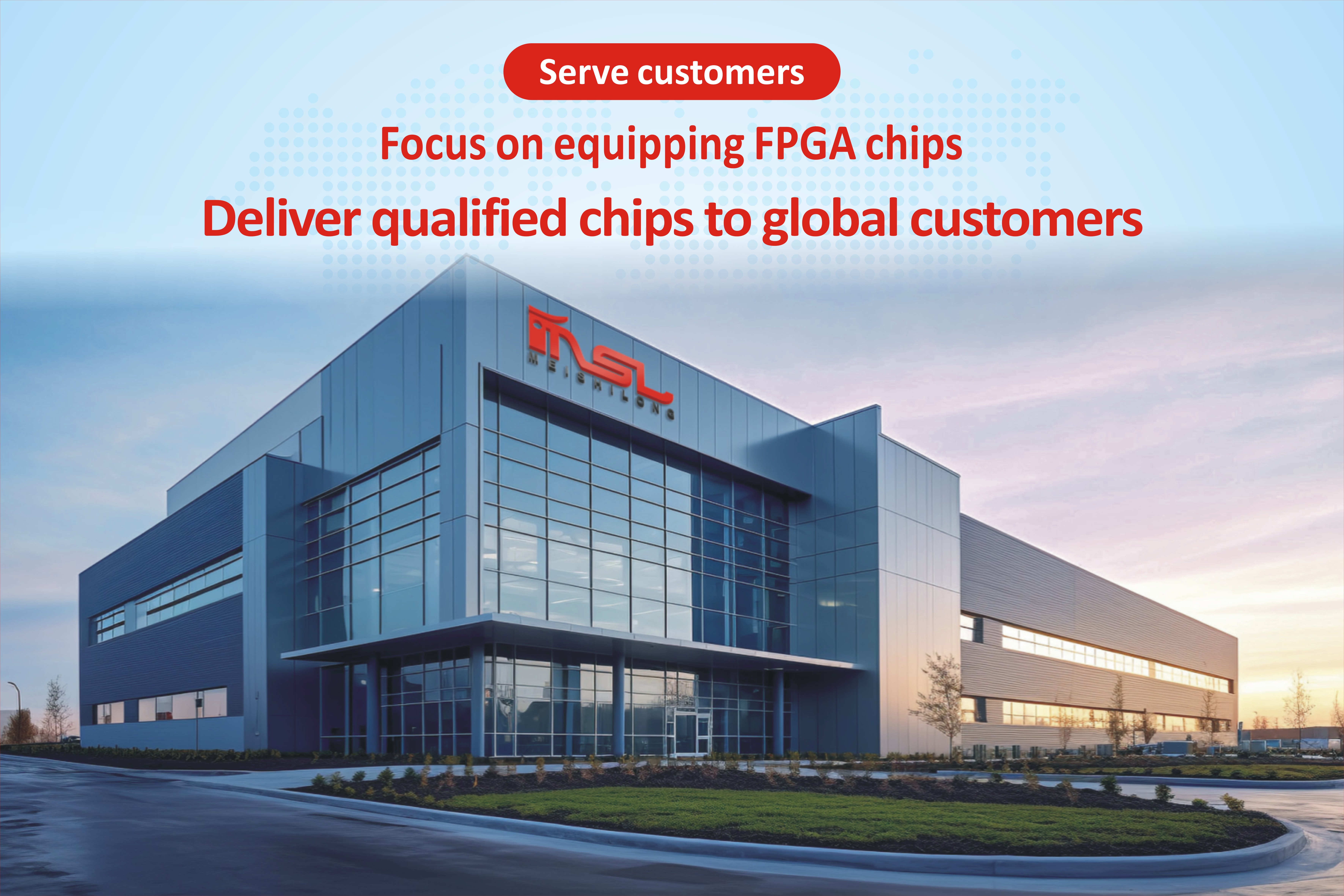

MSL FPGA INC (美时龙)计划建造一座2-5纳米晶圆厂制造项目,由MSL MEISHILONG 未来负责芯片制造
MSL FPGA INC 专门从事可编程逻辑器件FPGA的研发设计与制造
MSL MEI SHI LONG专注于研发设计FPGA周边器件及生产多种半导体器件.与FPGA配套,随着技术的不断进步, MSL MEISHI LONG产品也在不断地迭代更新,保持着在行业内的领先地位。
MSLFPGA公司计划建设一个2-5纳米的晶圆制造项目
MSL FPGA INC is planning to build a 2-5nm wafer fab project
晶圆厂通常被称为“Fab”,
Semiconductor fabrication plants are commonly referred to as "fabs."
1、“fabrication”(制造)的缩写,特指集成电路(芯片)的生产工厂。
An abbreviation of "fabrication," specifically referring to a semiconductor manufacturing plant.
2、晶圆代工(Foundry)密切相关,即专注于制造而非设计.
Foundry is closely related, which focuses on manufacturing rather than design
3、为芯片设计公司(Fabless)提供生产服务
Provide production services for Fabless, a chip design company


芯片工厂园区主要分为能源补给(宴会厅)和制造区两大板块,这次主要讲的就是它的核心制造区,整个区域分别包含:图纸晶圆设计、(芯片前端)晶圆制造、以及最后的封装测试。未来它每天的任务都是做重复的事情把“硅”材料,做成无所不能的芯片。“硅”是制造芯片的最好材料,芯片制造就是在半导体上雕刻出电路线路图,还要雕刻出开头,这样它就能制造出二进制“0”和“1”。它可以导电也可以不导电,只需施加电压就能改变它的导电性质,因此简称它为“半导体或集成电路(芯片)”。
The chip factory park is mainly divided into two sections: energy supply (banquet hall) and manufacturing area. This time, we will mainly talk about its core manufacturing area, which includes: drawing wafer design, (chip front-end) wafer manufacturing, and finally packaging and testing. In the future, its daily task will be to do repetitive things to turn "silicon" materials into omnipotent chips. Silicon is the best material for manufacturing chips. Chip manufacturing involves carving circuit diagrams and beginnings on semiconductors, allowing it to produce binary "0" and "1". It can conduct electricity or not, and its conductivity can be changed by applying voltage, so it is referred to as a "semiconductor or integrated circuit (chip)".


研发晶圆图纸设计:
首先在办公研发中心设计晶圆图纸,先在图纸上画好芯片的功能分区,再对每个分区展开设计,再细分到每一个节点,然后导入到EDA软件继续展开点与点设计,用EDA软件能把上千层不同的电路堆栈起来,模拟它的真实性能,一旦完成设计,研发中心就会把设计图,发送到核心制造区进行生产。
Research and development of wafer drawing design:
Firstly, design the wafer drawings in the office R&D center. First, draw the functional zones of the chip on the drawings. Then, design each zone and divide it into each node. Then, import it into EDA software to continue point by point design. EDA software can stack thousands of different circuits and simulate their real performance. Once the design is completed, the R&D center will send the design drawings to the core manufacturing area for production.


芯片前端(制造)流程:
其次在核心(前端)制造生产区不允许有灰尘的出现,所以工作人员上班前必须先清洗双手,戴上防尘帽,然后到更衣室穿上特制的工装,这种工装会对全身上下每个部位进行封锁,目的是为了防止,脱落的皮胖颗粒对里面造成污染,在即将进入之前,还要经过一个特殊的淋浴房,被过滤后的空气从数十个喷嘴喷出,把身上最后的残留灰尘清理干净,然后正式进入制造区,制造区内有包括光刻机在内的2000多台设备,整个车间比任何一个手术室还要干净1000倍,里面布置的都是全世界的先进光刻机,例如有:荷兰ASML交付的EUV光刻机,采用13.5nm极紫外光源,数值孔径0.55,支持2nm及更先进工艺节点制造。芯片制造的核心部分是硅晶圆的加工,要先对盘片完成研磨抛光,从原材料提纯、单晶生长、晶锭加工、切片与倒角、研磨与蚀刻、抛光与清洗等十几道工艺,硅晶圆的加工本质是“极限制造”技术的集大成者,从9N纯度控制到原子级表面平整,每一步都直接影响最终芯片的良率。然后在硅晶圆表面涂上一层光刻胶,这是一种对光刻机的紫外光极为敏感的材料,涂上胶以后放入光刻机,光刻机有点类似于照片打印机,但它的成本高达2亿美元以上,打印精度高的离谱,打印机的喷头相当于一根头发的大小,而光刻机相当于把头发放大10000倍以后,再到上面雕刻出一个复杂的晶体管,光刻机的紫外光是通过在光刻胶上曝光的方式进行雕刻,这是光刻机的爆光台,极紫外光刻(EUV)实现7nm以下制程,通过13.5nm波长光刻机将电路图案转移至光刻胶层,套刻精度需<1.5nm。涂胶、曝光、显影等步骤需在无尘室完成,避免纳米级污染。紫外光刻机来自上方的光学设备,它里面是透镜和包含电路图的掩膜,紫外光把掩膜上的电路图,投射到硅晶圆上进行曝光,曝光区域会凝固并保留下来,而没有曝光的区域则被“蚀刻”掉了,由于需要构建上千层的电路,因此这些步骤需要反复的进行,前后一共有200多个流程,芯片制造区必须采购高度自动化管理,让机器来生产半导体芯片,再让系统来管理这些机器,机器人将打印好的硅晶圆放入特制的小车上,然后再将小车送到顶部的轨道上,小车沿着轨道快速在每个工序之间移动,移动的小车上有感测器和芯片,这可以让整个系统识别它们,如果小车之间靠的太近时,它们还可以调节移动的速度,整个制造区一共有几千辆这种轨道小车,他们需要连接2000多台机器,16万多个传感器和8亿多个控制点。
Front-end chip manufacturing process:
Secondly, dust is not allowed in the core (front-end) manufacturing and production area, so workers must wash their hands before going to work, wear dust caps, and then go to the changing room to wear special workwear. This kind of workwear will block every part of the body to prevent pollution caused by falling skin particles. Before entering, they must pass through a special shower room, where filtered air is sprayed out from dozens of nozzles to clean the last residual dust on their bodies. Then they can officially enter the manufacturing area, which includes more than 2,000 equipment such as lithography machines. The entire workshop is 1,000 times cleaner than any operating room, and it is equipped with the world's most advanced lithography machines, such as the EUV lithography machine delivered by ASML in the Netherlands, which uses a 13.5nm extreme ultraviolet light source with a numerical aperture of 0.55 and supports the manufacturing of 2nm and more advanced process nodes. The core part of chip manufacturing is the processing of silicon wafers, which involves grinding and polishing the disc first, and then going through more than ten processes such as raw material purification, single crystal growth, ingot processing, slicing and chamfering, grinding and etching, polishing and cleaning. The processing of silicon wafers is essentially the culmination of "extreme manufacturing" technology, from 9N purity control to atomic-level surface flatness, each step directly affects the final chip yield. Then a layer of photoresist is applied to the surface of the silicon wafer, which is a material extremely sensitive to the ultraviolet light of the lithography machine. After applying the glue, it is placed in the lithography machine, which is somewhat similar to a photo printer but costs more than $200 million. The printing accuracy is ridiculously high, with the printer's nozzle equivalent to the size of a hair, while the lithography machine is equivalent to magnifying the hair by 10,000 times and then engraving a complex transistor on it. The ultraviolet light of the lithography machine is used to engrave by exposing the photoresist. This is the exposure stage of the lithography machine, which achieves process nodes below 7nm through extreme ultraviolet lithography (EUV). The circuit pattern is transferred to the photoresist layer through a 13.5nm wavelength lithography machine, with a overlay accuracy of <1.5nm. The steps of applying glue, exposure, and development need to be completed in a dust-free room to avoid nanoscale pollution. The UV lithography machine is an optical device from above, which contains lenses and a mask with circuit diagrams. UV light projects the circuit diagrams on the mask onto the silicon wafer for exposure. The exposed areas will solidify and remain, while the unexposed areas will be etched away. As thousands of layers of circuits need to be constructed, these steps need to be repeated. There are more than 200 processes in total. The chip manufacturing area must be highly automated, with machines producing semiconductor chips and systems managing these machines. Robots place the printed silicon wafers onto specially made trolleys, which are then sent to the top track. The trolleys move quickly along the track between each process. The moving trolleys have sensors and chips, which allow the entire system to recognize them. If the trolleys are too close to each other, they can adjust their moving speed. There are thousands of such track trolleys in the entire manufacturing area, which need to be connected to more than 2,000 machines, more than 160,000 sensors, and more than 800 million control points.


最后再进入到组装和测试区,而大多数工作人员只需要在远端控制这个系统就行了,几千道工序都由自动化来完成,完成以后就取下小车,对晶圆进行性能测试,是对已经接近成品的硅芯片再进行测试,这些硅芯片里面是世界上最复杂的集成电路,测试完以后再把这些芯片切割出来,切割和封装都在封装区里面完成,切割的方法并不复杂,机械手在程序下行走有切割轨迹。用金刚石刀片进行切割,然后把切割出来的芯片提取出来,放到用于封装芯片的集成电路板上,那是芯片和外部设备通信的电路板,这是用黄金做的细线,黄金是最好的导体,使用金线焊接可以最大程度发挥半导体的性能,最后是封装,由于硅材料对环境非常敏感,所以必须把它密封到黑色保护盘中,在整个封装过程中,包含了最后的检测程序,合格的芯片都会用激光打上丝印标签,最后再根据订单进行打包,让销售部门并交付到全球客户手中。MSL FPGA INC我们坚持要做到让客户放心,让客户满意。
Finally, we enter the assembly and testing area. Most of the staff only need to control the system remotely. Thousands of processes are completed by automation. After completion, the trolley is removed and the wafer is tested for performance. This is a test on the silicon chips that are close to finished products. These silicon chips contain the most complex integrated circuits in the world. After testing, these chips are cut out. Cutting and packaging are completed in the packaging area. The cutting method is not complicated. The robot arm moves down the program with a cutting trajectory. Diamond blades are used for cutting, and then the cut chips are extracted and placed on the integrated circuit board for packaging chips. That is the circuit board for communication between the chip and external devices. It is made of gold thin wires. Gold is the best conductor. Using gold wire welding can maximize the performance of semiconductors. Finally, it is packaging. Because silicon materials are very sensitive to the environment, they must be sealed in a black protective disk. During the entire packaging process, including the final inspection procedure, qualified chips are marked with silk screen labels by laser. Finally, they are packaged according to orders and delivered to customers worldwide by the sales department. MSL FPGA INC We insist on reassuring and satisfying our customers.


MSL FPGA INC is planning to builda 2-5nm wafer fab,
with MSL MEISHILONGmanufacturing the chips Fabrication
MSL FPGA INC计划建造一座2-5纳米晶厂,由MSL MEISHILONG负责芯片制造
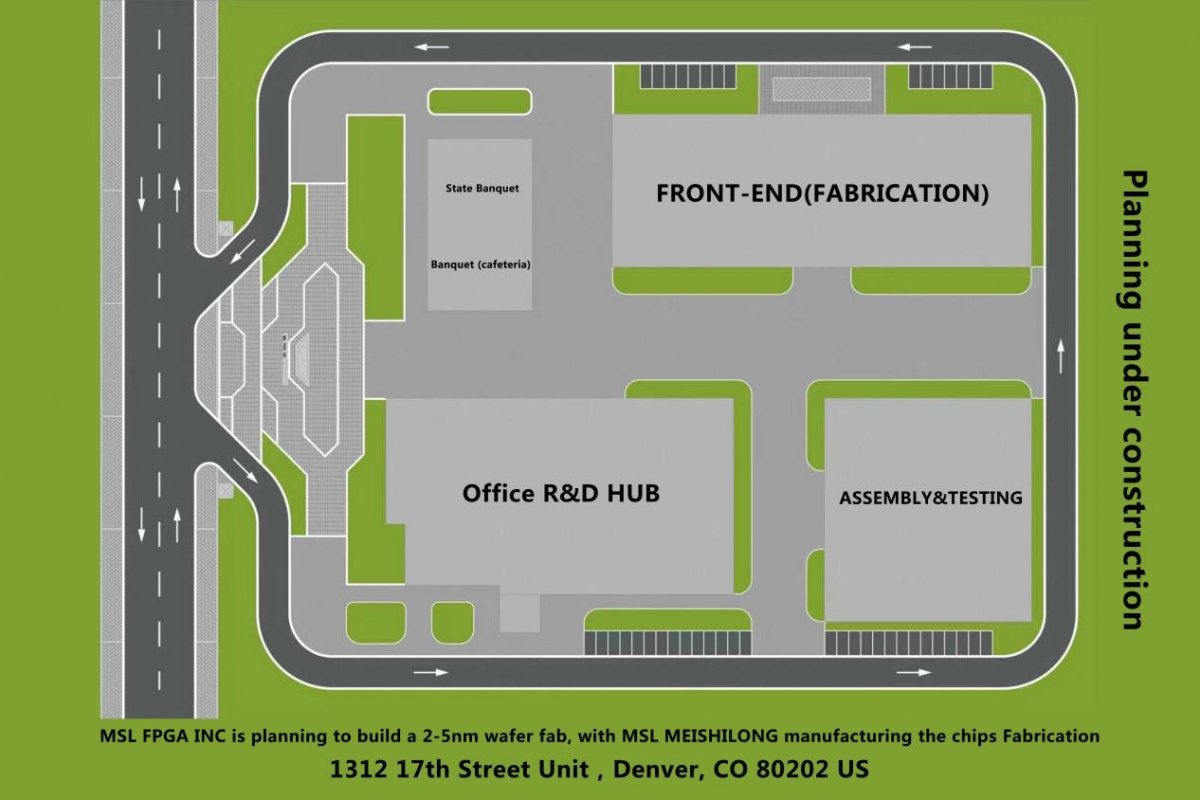
这是MSL FPGA INC正计划建设一座2-5纳米晶圆制造的芯片工厂,项目位于MSL FPGA INC,美国科罗拉多州丹佛市第17街,邮编80202。
This is MSL FPGA INC planning to build a 2-5 nanometer wafer manufacturing chip factory, located at 17th Street, Denver, Colorado 80202, USA.